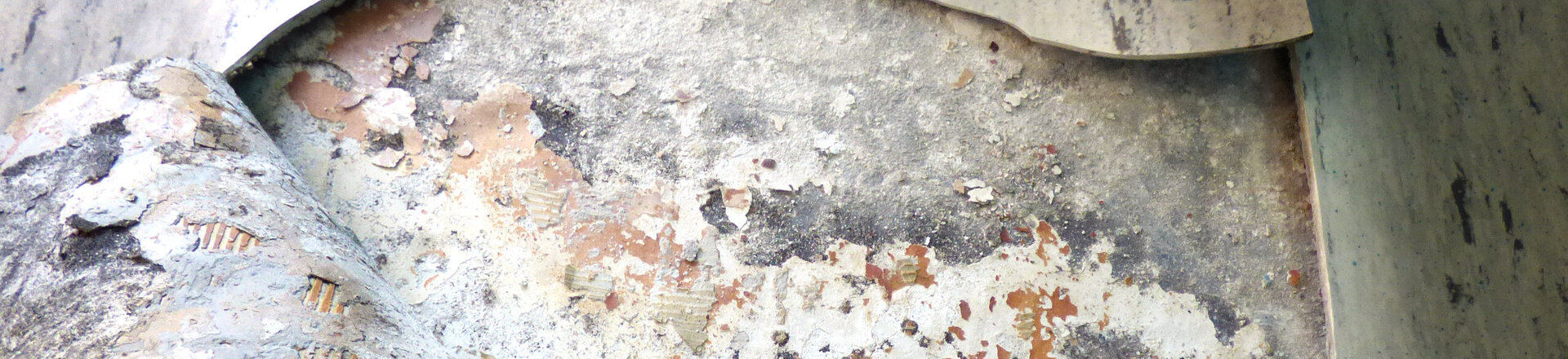
Buildings may contain numerous hazardous substances that pose a health risk to humans. Examples include asbestos, man-made mineral fibers, polychlorinated biphenyls (PCBs) from paints or jointing materials, and polycyclic aromatic hydrocarbons (PAHs), such as those found in waterproofing membranes or coatings.
At the latest when buildings are being demolished or renovated, a risk assessment must be conducted to determine whether protective measures are necessary when handling building materials and/or whether the disposal of the waste may pose a problem.
During targeted building inspections, our experienced experts take samples of suspicious materials and analyze them in our laboratories.
A particular focus of building inspections is on wall plasters, joint compounds, and tile adhesives containing asbestos, which have only come into focus in recent years. These materials were used well into the 1990s. A systematic approach is also prescribed for these materials to ensure that entire buildings are inspected. However, a situation-specific approach—for example, prior to replacing windows—is also common practice.
When buying or selling real estate, it is becoming increasingly important to clarify any potential issues related to hazardous substances before setting a price. Testing for hazardous substances in buildings, including an estimate of the associated costs, has now become an integral part of Environmental Due Diligence Assessments (EDDA).
COMPETENZA is happy to assist you with this part of the pre-purchase review. We can prepare the accompanying documentation in either German or English.